
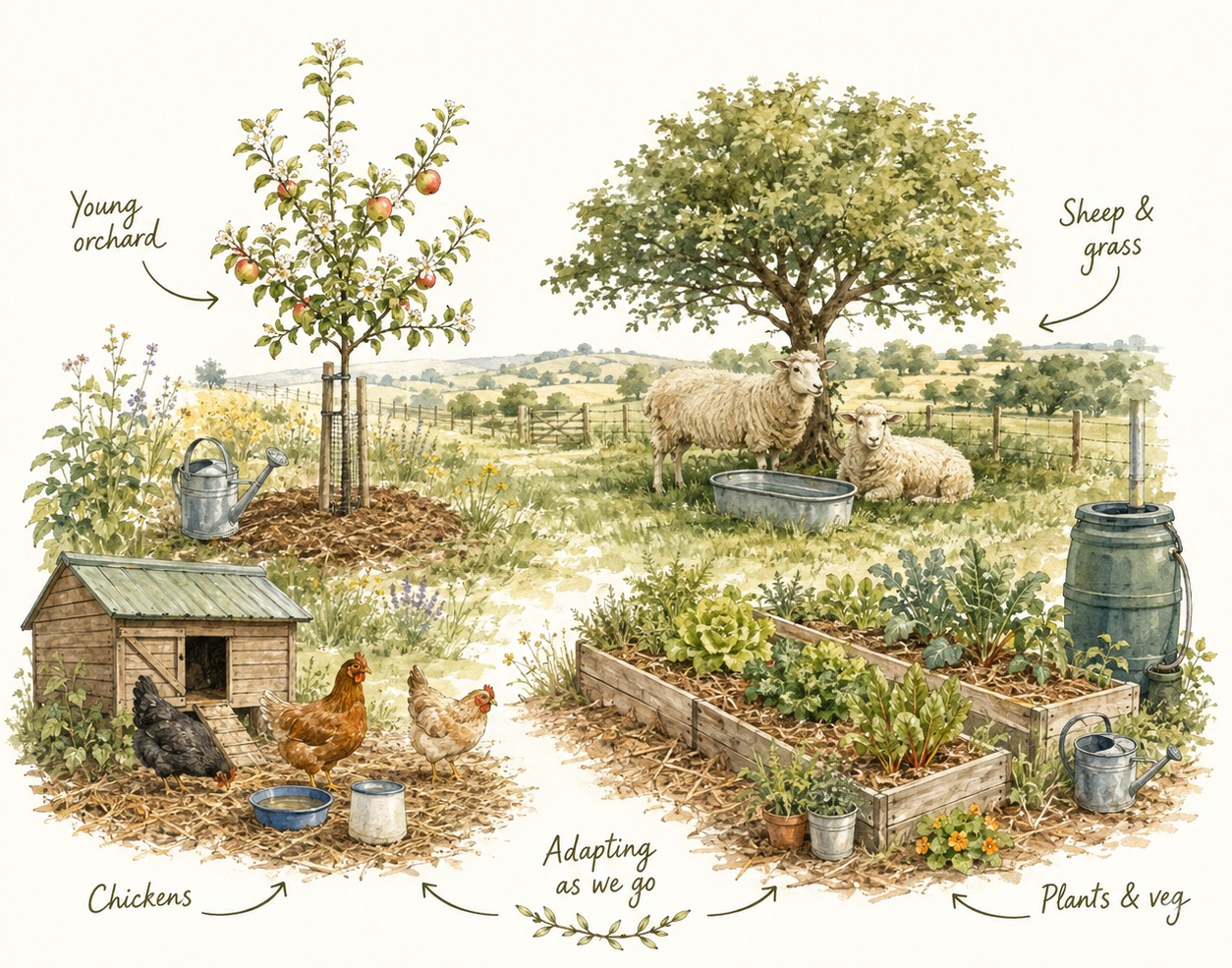
There is a strange stillness that comes with prolonged dry weather. The fields lose their softness, the grass turns yellow, the vegetable beds seem thirsty almost as soon as they are watered, and the animals quietly change their routines.
Our smallholding includes an apple orchard, vegetable gardens, grazing areas and animals including sheep and chickens. It is the kind of place where the seasons are usually easy to see: blossom, grass growth, eggs, lambs, apples, leaves, mud, frost and fresh green shoots.
This dry spell has made everything feel a little more fragile. We also know that many people, farms, gardens and wildlife habitats are facing much harder conditions than we are.
We’re lucky.
But like many gardeners and smallholders, we’re adapting as we go and hoping for rain.
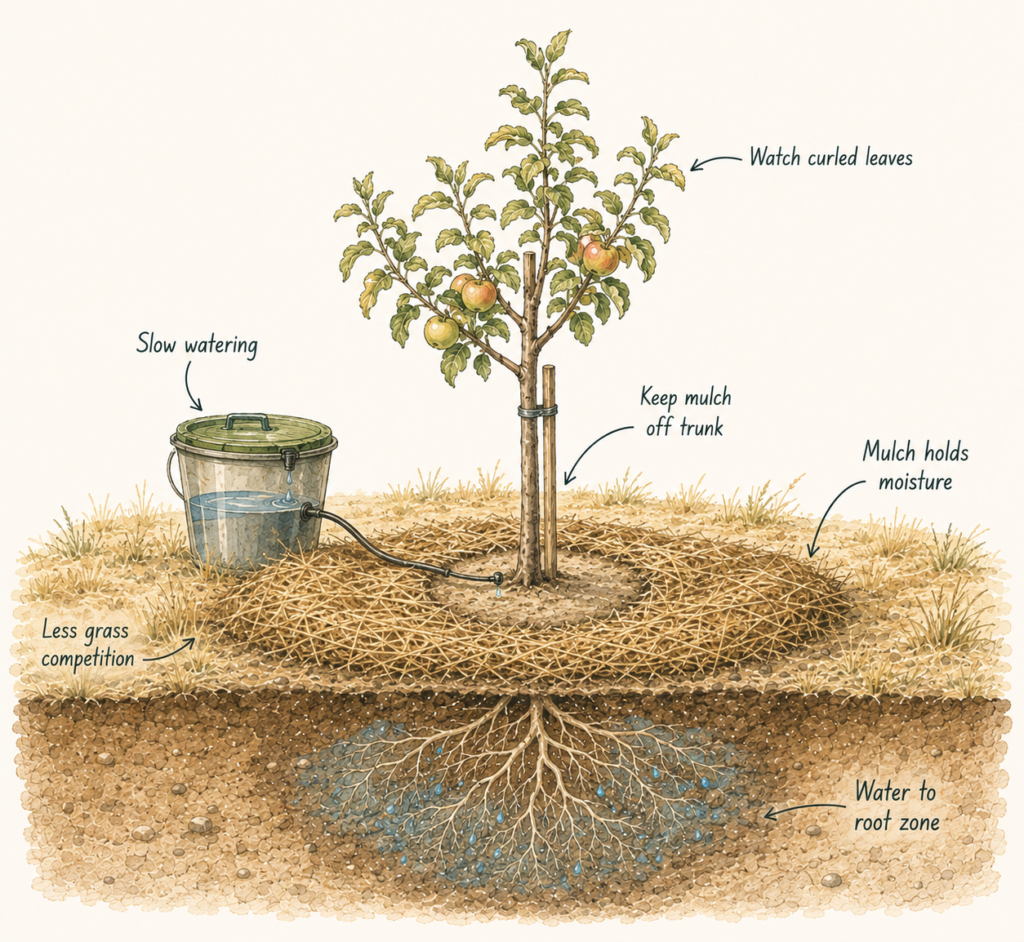
Young Orchard: Giving the Apple Trees a Helping Hand
The young apple trees are one of the first places we have really noticed the stress. Young or newly planted apple trees are more sensitive to drought because their roots are not yet as developed as older, established trees. The RHS also recommends watering newly planted apple trees regularly during dry spells for the first couple of years, while established trees in the ground generally need less attention once settled.
General guidance for young fruit trees recommends regular watering through early summers after planting, with slow watering so moisture reaches the root zone. That makes sense when you see how dry the top layer of soil can become while the deeper roots still need support.
We are also mulching around the young trees. Mulch helps conserve moisture and reduce competition from weeds and grass, and the RHS recommends annual mulching for newly planted fruit trees during their first few years. The important detail is not to pile mulch against the trunk, because mulch touching the bark can encourage decay or disease problems.
The signs we are watching for are curled leaves, yellowing, leaf scorch, early leaf drop or fruit dropping before it should.
None of this means we panic. It just means we look more closely, check the soil, and try to give the trees the best chance we can.
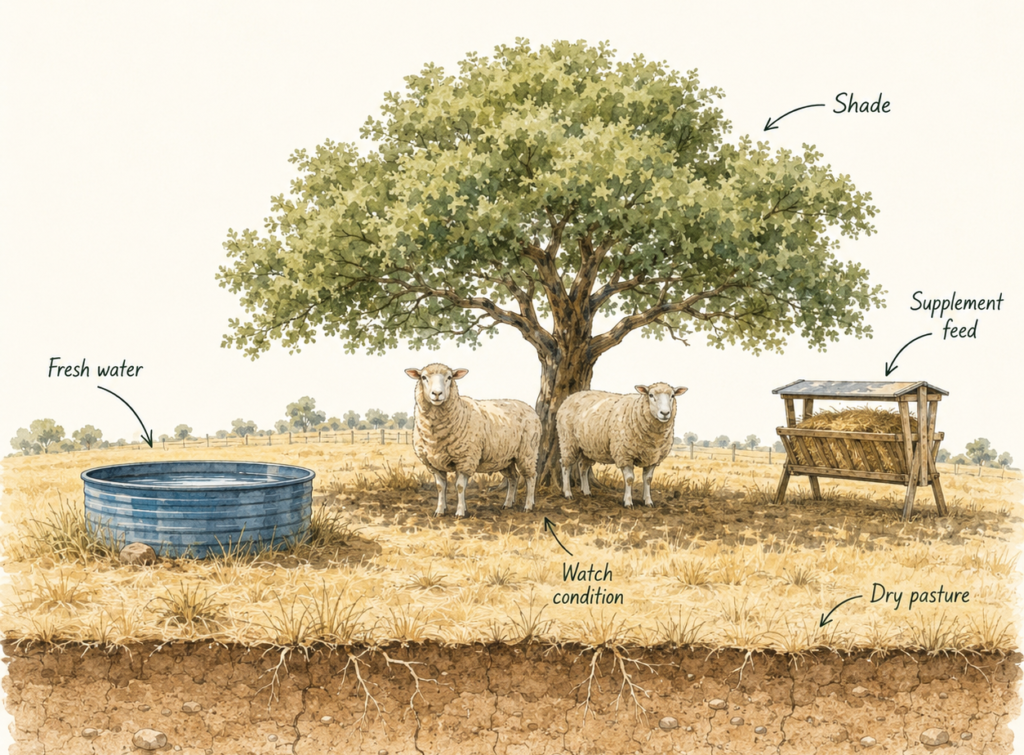
Sheep and Grass: When the Grazing Runs Out of Puff
The fields are yellow now, and that changes things for the sheep. In greener times, fresh pasture contains a lot of moisture, and sheep can meet some of their water needs from grazing. Lush spring grasses are high in water content, but as pasture matures and dries, additional drinking water becomes much more important.
That is exactly what we are seeing. The sheep are drinking more than usual, so we are checking and replenishing fresh water frequently. Clean, cool water is essential for sheep health, feed intake and heat-stress management.
Dry grass also means the pasture is not offering the same nutrition. Drought guidance for sheep and goats notes that during drought, animals may struggle to meet nutritional needs and can lose condition if extra support is not provided.
So we are supplementing with hay and feed, while keeping an eye on body condition and behaviour.
Shade matters too. Sheep and goats use shade-seeking, changes in grazing time and increased water intake to cope with heat, but those behaviours do not remove all risk in hot conditions. Signs such as crowding around water, shade seeking, increased breathing, drooling, staggering or open-mouth panting are warning signs to take seriously.
It is a good reminder that a field can look “fine” from a distance, but to the animals grazing it, the quality and moisture can have changed completely.
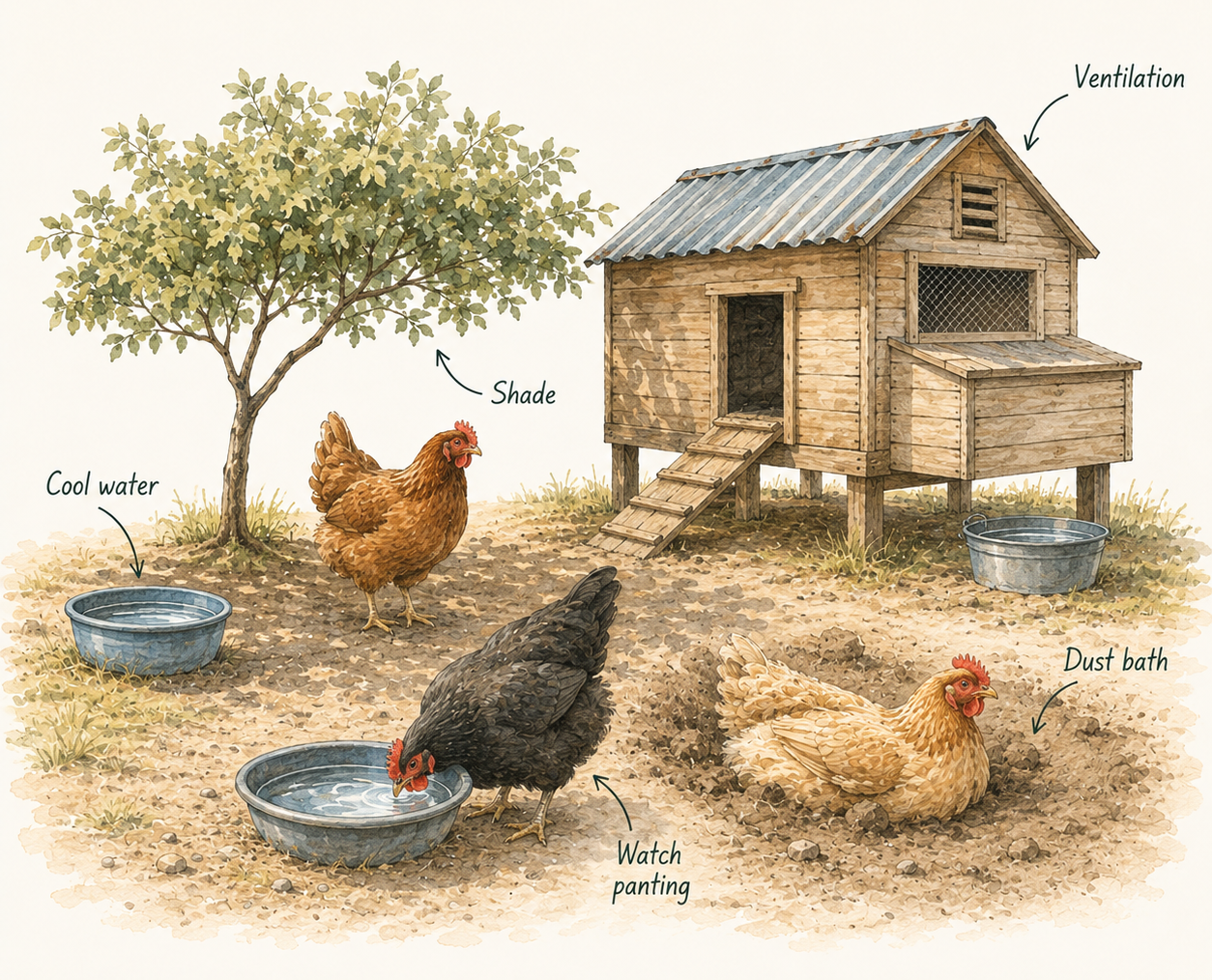
Chickens: Shade, Water and Small Daily Checks
The chickens seem to handle dry weather in their own busy, chicken-like way, but they need watching too. Chickens cannot sweat; shade, water and ventilation are the three most basic needs for helping backyard chickens stay comfortable in extreme summer temperatures.
At Greenfield, we are looking more carefully at where the shade actually falls during the day. A shady morning spot can be full sun by afternoon, and poultry guidance specifically recommends considering how the sun moves so birds still have shade during the hottest hours.
Fresh water is the big one. Chickens should always have access to clean, cool water in summer heat, and multiple water sources in shaded areas can encourage drinking. We are checking drinkers more often and making sure water is easy for all the birds to reach.
We are also watching behaviour. Panting, wings held away from the body, crouching, pale combs or wattles, lethargy, limpness or collapse can all indicate heat stress or heat exhaustion in chickens. A little panting on a hot day may happen, but it is still a prompt to check shade, water and airflow.
Chickens often look cheerful even when conditions are not ideal, so those quick daily checks matter.
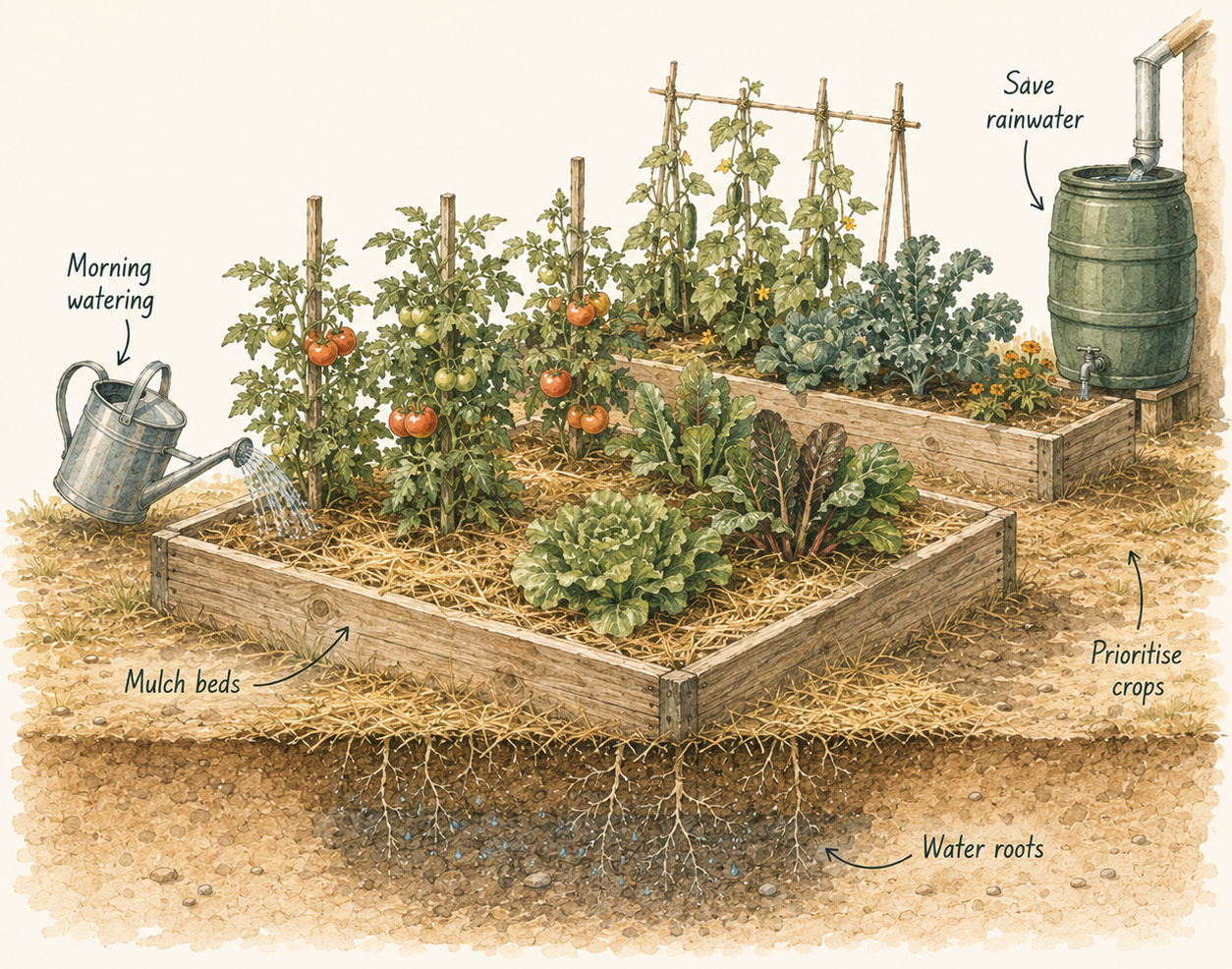
Plants and Vegetables: Making Every Drop Work Harder
The vegetable beds are where dry weather can feel most immediate. Some plants pause, some bolt, some sulk, and some surprise us by coping better than expected. The RHS notes that vegetables are largely made up of water and are vulnerable in dry soil, but that there are ways to grow them that make better use of available water.
We are trying to water more carefully rather than more often. The RHS recommends watering thoroughly but not too often, avoiding the habit of only wetting the top centimetre of soil. Watering at the base of plants also makes more sense than spraying paths, leaves or bare soil.
We are also leaning heavily on mulch. RHS guidance says mulching after watering or rainfall with a 5-7.5cm layer of organic matter helps retain moisture and suppress weeds.
Weeds are not just untidy in dry weather; they compete with crops for water and nutrients.
Some crops are getting priority. The RHS notes that leafy crops and salads are particularly vulnerable, while root crops such as carrots, beetroot and parsnips are more drought tolerant; fruiting or podding crops are especially vulnerable at flowering time. That means we are more likely to prioritise seedlings, containers, leafy crops, plants setting fruit, and anything recently planted.


